
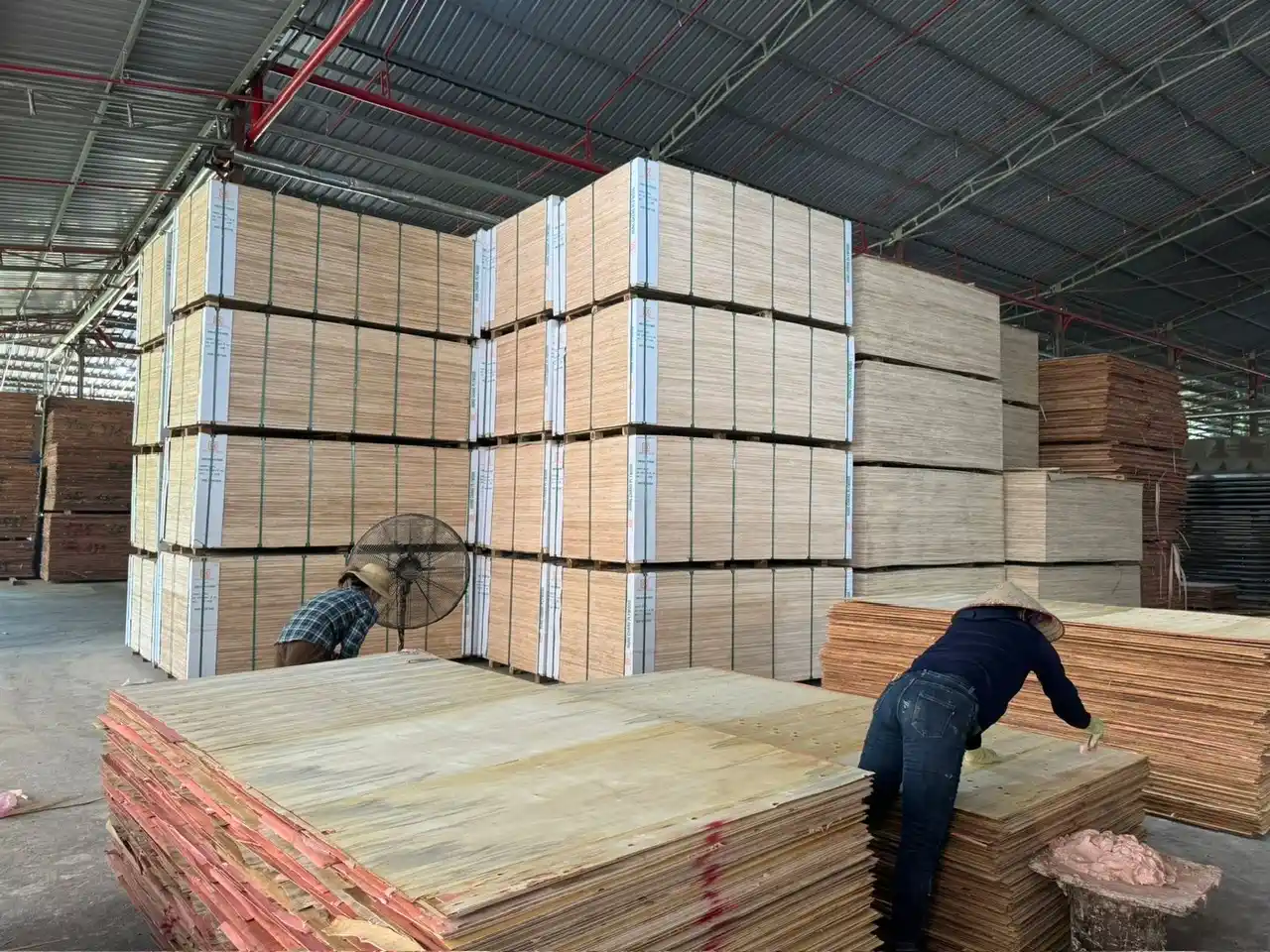
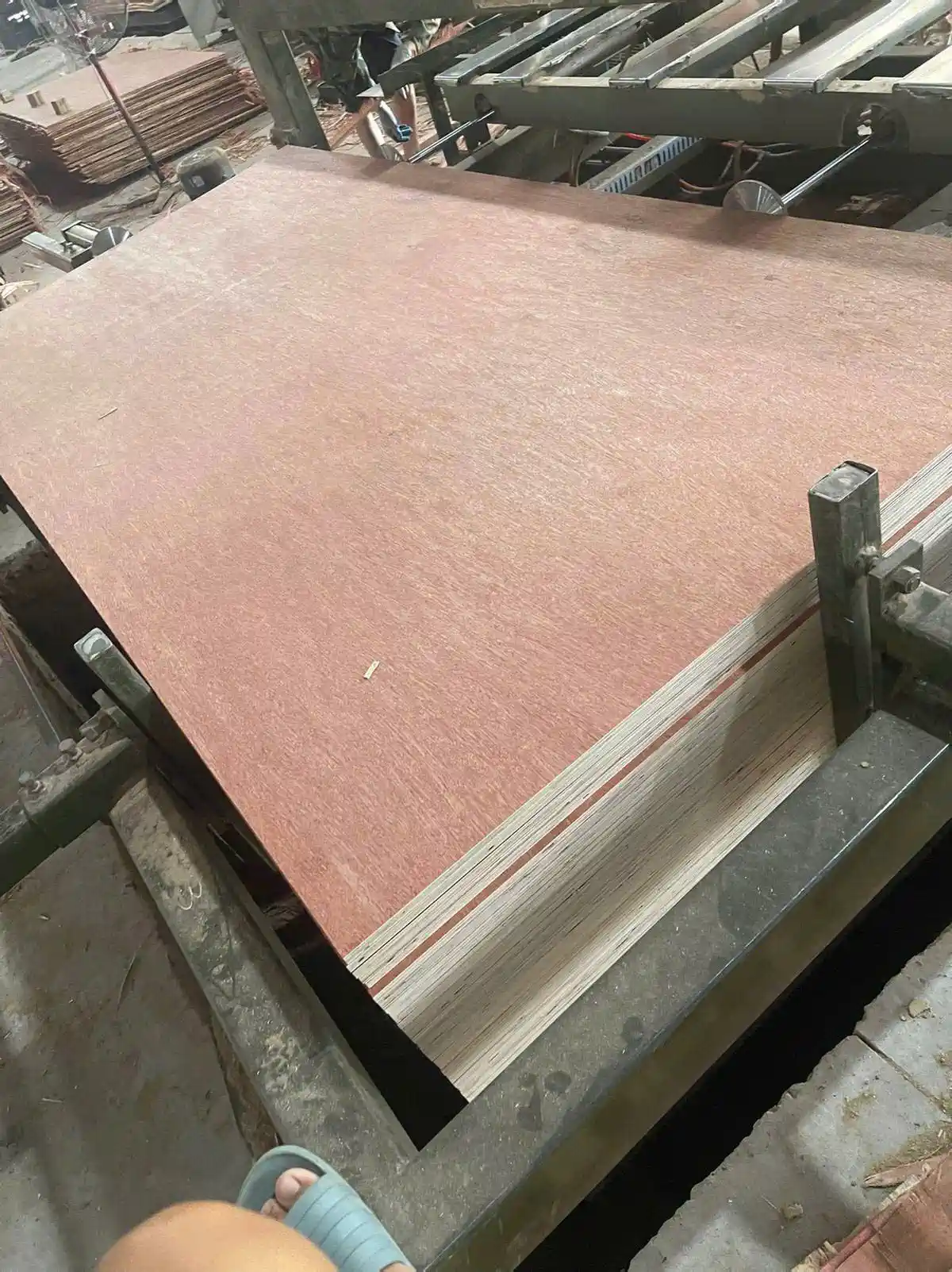


On a formwork order, the cheapest sheet is rarely the cheapest pour. A bare panel wins the line-item price and loses on the job, because it absorbs water, leaves a rough finish and is scrap after a few uses. A film-faced panel costs more up front and is often far cheaper per pour. The right comparison is cost per use, not cost per sheet.
This guide is written for construction buyers. Read it with our Vietnam formwork-grade construction plywood page and the types of plywood classification guide.
📦 What separates the two panels
Bare plywood is a finished panel with no surface film. Film-faced plywood has a phenolic or melamine film bonded to the face, sealing the surface against water and giving concrete a smooth finish. That film is the difference between a few pours and many. For wet, repeated use, the film does the work.
🔁 Reuse count is where the money is
A bare panel typically manages only a handful of pours before the surface roughens and absorbs water. A film-faced panel built with a quality film and a dense core reaches far more. A buyer in France runs our melamine-filmed panels for repeated cycles; with a quality film over a dense core, around 12 to 15 reuses is realistic when panels are cleaned, oiled and stored properly. Spread the sheet price across that many uses and the film-faced option usually wins on cost per pour.
🌳 The core under the film
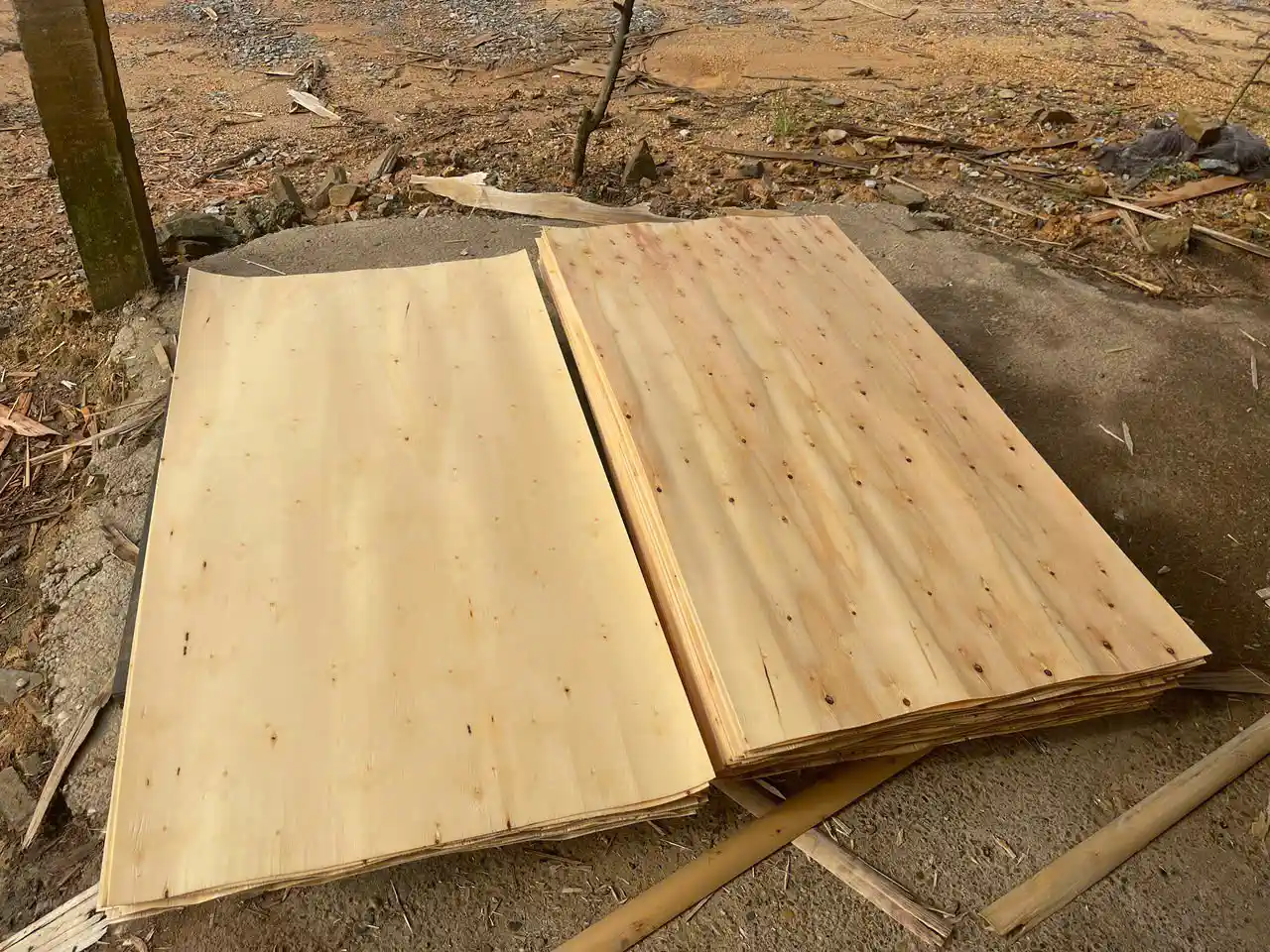
Density matters under repeated loading. The Vietnamese cores used for formwork are eucalyptus (about 650 kg/m³) and acacia (about 580 kg/m³) — the denser, stiffer species — rather than the light styrax used for furniture. The core carries the load; the film carries the finish. Our core veneer page sets out the species.
⚙️ The glue must be phenolic (WBP)
For anything exposed to water, the glue line should be phenolic (WBP) — Water Boil Proof — not melamine (MR). WBP is a glue class describing water resistance, separate from the emission grades (E0/E1/E2) that matter for indoor furniture. For formwork, ask for the phenolic confirmation and the boil-test report; emission grade is not the relevant field here.
💶 Comparing cost honestly
Put both panels on a cost-per-pour basis. Take the sheet price, divide by realistic reuses, and add the cost of poor finishes and early replacement for the bare option. A film-faced panel with a higher sheet price and 12 to 15 reuses frequently beats a bare panel that is scrap after a few. A factory-direct Vietnam plywood manufacturer can state film type, core and expected reuse so the comparison is real.
🔧 Specifying a formwork panel
Write the full build: film type and weight, core species, glue class (WBP) with boil-test reference, thickness and tolerance, panel size, and edge sealing. For surfaces needing grip, see our anti-slip plywood. A clear specification is what makes the reuse claim hold on site.
🧹 Handling and storage decide the reuse you actually get
The reuse figure on a quote assumes the panels are looked after, and on site they often are not. To reach the upper end of a film-faced panel’s life, edges should be sealed against water ingress, surfaces cleaned and lightly oiled between pours, and panels stored flat and dry rather than leaning in the rain. Nail and screw placement matters too — random fixing chews up the film faster than a planned layout. A buyer who budgets for 12 to 15 reuses but stores panels badly will see far fewer, then blame the product. Treating the panel as reusable tooling, not a throwaway sheet, is what makes the cost-per-pour maths come true.
📐 Specification fields that change reuse life
Three fields move the reuse number more than the headline price. Film weight — a heavier film (measured in grams per square metre) takes more pours before wearing through. Core density — eucalyptus and acacia resist the repeated loading that would crush a lighter core. Edge sealing — a sealed edge keeps water out of the core, which is where bare and poorly finished panels fail first. Ask the supplier to state film weight, core species and edge treatment, not just “film-faced”. A factory-direct manufacturer can give all three from its own production; a vague answer usually means a thinner film than you expect.
✅ Which to choose
Choose bare plywood only for low-reuse or non-critical-finish work where up-front price dominates. Choose film-faced for repeated pours and a smooth concrete finish — it is usually the lower cost per use. To receive film-faced formwork samples with film and reuse details, send your specification through our contact page.